
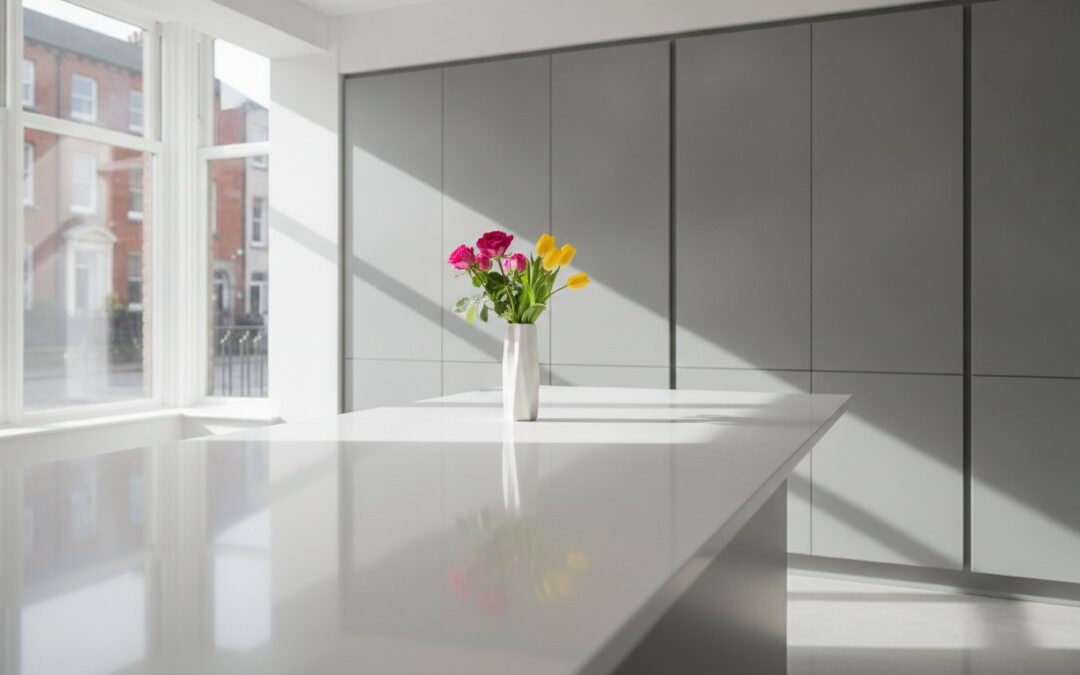
Why does that fine, white film keep appearing on your brand new worktops just hours after you have wiped them down? It is a common frustration for homeowners who have just completed a build or renovation; no matter how much you clean, the dust seems to settle again by morning. This residue is more than just an eyesore. It often contains abrasive plaster and silica particles that can irritate your respiratory system and even scratch your expensive new finishes if handled incorrectly.
We understand that you want to stop scrubbing and start enjoying your beautiful new space. When you are choosing a post renovation cleaning service Ireland, it is vital to find a team that treats your home with the same care you do. You deserve a result that is not just “tidy,” but truly immaculate and safe for your family to inhabit. Protecting your renovation investment means moving beyond standard domestic chores to a more forensic approach.
In this professional guide, we share the meticulous, top-down strategy used to reclaim a pristine environment. You will discover the essential three-phase cleaning process required to eliminate stubborn construction dust for good. By the end, you will know exactly how to achieve that sparkling, “move-in ready” finish so you can finally relax and get on with the things that matter in your life.
Key Takeaways
- Learn why renovation dust lingers for days and how to effectively address the mix of silica and gypsum particles that settle on your new finishes.
- Discover the professional “top-down” extraction method that ensures airborne particles are removed rather than just redistributed throughout your home.
- Uncover the “invisible layer” of dust hiding in cupboards, drawers, and electronics that often compromises your indoor air quality.
- Understand the critical factors when choosing a post renovation cleaning service Ireland to ensure your large five or six-bedroom home is returned to a pristine state.
- Find out why standard domestic equipment is insufficient for removing the abrasive grit that can cause premature wear to your new carpets.
Understanding Post-Renovation Fine Dust: Why It Lingers Amongst New Finishes
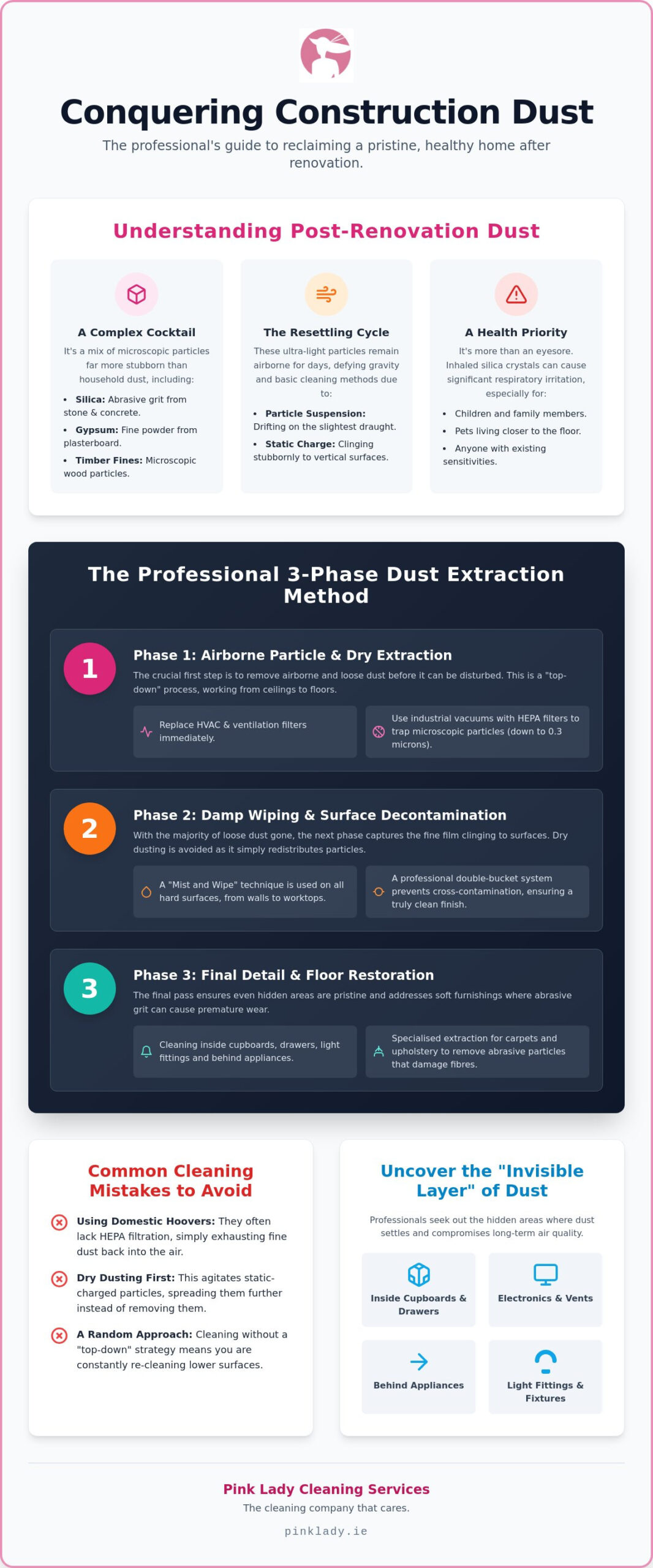
Stepping into your newly renovated home should be a moment of pure joy. Instead, many Irish homeowners find themselves facing a persistent grey film that coats every surface. To solve this, you first need to understand what is construction dust exactly. Unlike standard household debris, renovation residue is a complex cocktail of crushed silica from stone and concrete, gypsum from plasterboard, and fine timber particles. These materials are ground down during the building process into microscopic “fines” that behave very differently from organic dust.
These particles are so light that they experience “particle suspension.” They can remain airborne for several days, drifting on the slightest draught before finally settling. This is why a room can look spotless at 8:00 PM and be covered in white powder by breakfast. If you are currently choosing a post renovation cleaning service Ireland, you must ensure they use industrial-grade equipment. Standard domestic hoovers are designed for hair and crumbs; they often lack the filtration to trap microscopic renovation dust. Instead of removing the powder, they simply suck it in and exhaust it back into the air, creating a never-ending cycle of resettling.
The Science of Static and Resettling
Plaster dust is notorious for carrying a static charge. This allows it to cling stubbornly to vertical walls and ceilings, defying gravity. When you attempt to dry dust these surfaces, you aren’t actually removing the debris. Instead, you are agitating the particles and giving them a fresh charge, causing them to spread further. This “resettling cycle” is the primary reason DIY efforts feel so futile. Professional extraction requires a damp-wipe methodology and specialised vacuums to break that static bond and reclaim your space.
Health Risks of Construction Residue
Removing this residue is a health priority for your family, not just an aesthetic one. Silica dust is particularly hazardous; if inhaled, these sharp, microscopic crystals can cause significant respiratory irritation. This is especially concerning for children and pets who spend more time near floor level where dust concentrations are highest. Whilst attempting any DIY cleaning, you should always wear high-grade PPE, including an N95 mask. However, the most effective way to protect your long-term air quality and ensure a truly immaculate environment is through professional-grade HEPA extraction. A pristine home is a safe home.
The Professional 5-Step Method for Fine Dust Extraction
Achieving a truly pristine home after builders have left requires more than a standard mop and bucket. It demands a forensic, systematic approach. Professionals follow a strict “Top-Down, Left-to-Right” methodology. This ensures that as dust is dislodged, it falls onto surfaces that haven’t been cleaned yet, preventing you from doing the same job twice. When choosing a post renovation cleaning service Ireland, ask about their specific sequence. A random approach often leaves microscopic grit behind, hidden in the very corners you thought were finished.
Step 1 & 2: Clearing the Air and Dry Extraction
The first priority is the air you breathe. Before any wiping begins, professional teams focus on settling airborne particles. If your home has a ventilation or HVAC system, those filters should be replaced immediately after the construction phase. They are likely clogged with debris that will otherwise circulate for months. Next comes dry extraction using industrial-grade vacuums. These machines must be fitted with HEPA filters capable of trapping particles as small as 0.3 microns. This stage is crucial because of the significant health risks of construction dust, which can linger in the lungs if not properly extracted. We start with the highest points: ceilings, cornices, and light fixtures, before moving down the walls to the skirting boards and floors.
Step 3 & 4: Damp Wiping and Soft Furnishings
Once the bulk of the dry grit is removed, we move to the “Mist and Wipe” stage. Dry dusting at this point is a mistake; it merely pushes the powder around. Instead, professionals use a double-bucket system. One bucket contains a specialised cleaning solution, whilst the other is for rinsing. This prevents cross-contamination. High-quality microfibre cloths are essential here. Their unique structure traps fine plaster dust rather than just spreading it. This meticulous attention to detail is what creates that signature “sparkle” finish.
Finally, we address the soft furnishings and perform a final inspection. Fine dust acts like sandpaper on delicate fabrics. Sofas, curtains, and bed frames often require deep extraction or steam cleaning to remove the grit embedded deep within the fibres. If the task feels overwhelming, you might consider a professional Post Builders Cleaning to ensure every inch of your investment is protected. This level of deep cleaning restores your home to an immaculate state, allowing you to finally relax in a healthy, beautiful environment.
Identifying and Cleaning Hidden Dust Traps Within Your Renovated Home
Even after the primary extraction stages are complete, you might notice a persistent gritty feeling on surfaces that look visually clear. This is because renovation dust is incredibly opportunistic. It doesn’t simply settle on the floor; it migrates through the smallest structural gaps and travels through ventilation shafts to reach “sealed” areas. When choosing a post renovation cleaning service Ireland, it’s vital to ensure their team has the meticulous eye required to hunt down these hidden reservoirs. A truly immaculate home is only possible when the dust you cannot see is removed along with the dust you can.
One of the most overlooked areas is the “invisible layer” found on the very tops of doors, picture rails, and high-level skirting boards. These flat surfaces act as shelves for airborne particles. If left uncleaned, every time a door is closed or a person walks by, a small cloud of silica and plaster is released back into your breathing zone. Handling delicate features like ornate cornicing or crystal chandeliers requires a gentle touch and specialised soft-bristle attachments to prevent scratching the new finishes whilst ensuring every crevice is pristine.
Efficiency also depends on “cleaning the cleaners.” Because construction powder is so fine, it clogs equipment much faster than standard household dust. Professional teams frequently rotate their microfibre cloths and check HEPA filters throughout the day. If a cloth becomes saturated with grit, it stops cleaning and starts acting like sandpaper, which can permanently dull the sparkle of your new surfaces.
Kitchen and Bathroom Details
Kitchen cupboards and bathroom vanities are notorious dust traps. Fine grit often accumulates inside hinges and along drawer runners. If not removed, this residue grinds against the hardware every time you open a door, causing premature wear. New wall tiles also require specific attention; they often carry a stubborn grey film from the grouting process. We use a pH-neutral approach to lift this haze without scratching the delicate glaze, leaving your splashbacks truly sparkling and smooth to the touch.
Ventilation and Light Fixtures
Heat circulates dust, which makes radiators and light fixtures primary targets for deep cleaning. We use compressed air or slim vacuum probes to clear the fins inside radiators and the spaces behind wall-mounted units. Don’t forget the “Bulb Check.” Dust on lightbulbs can create a faint burning smell when the lights are switched on and heated. Finally, kitchen and bathroom extractor fans must be cleared of internal debris to restore proper airflow and ensure your family enjoys the best possible air quality in your beautiful new environment.
For homeowners with integrated climate control, ensuring the internal components are free from microscopic construction debris is vital for maintaining air quality. To understand the scope of such work, you can explore LALA COOL’s pay-per-use air conditioning cleaning and disinfection service fees as a reference for professional deep-sanitisation standards.
Restoring Carpets and Upholstery After Renovation
Whilst hard surfaces show dust immediately, your carpets and soft furnishings act as giant filters that trap renovation residue deep within their fibres. This is a significant concern because silica and plaster particles are essentially microscopic shards of glass. Every time you walk across a dusty carpet, these sharp edges grind against the delicate yarns, causing premature wear and a dull, grey appearance. If your curtains or sofas feel stiff to the touch or look slightly muted in colour, they’ve likely become reservoirs for construction grit.
Standard domestic hoovers simply aren’t equipped to handle this level of contamination. They lack the industrial suction required to lift heavy grit from the base of the carpet pile. When you are choosing a post renovation cleaning service Ireland, it’s vital to ensure they provide deep extraction rather than just a surface vacuum. Without professional intervention, that fine powder will continue to “puff” into the air every time someone sits on a sofa or walks through a room, compromising the air quality we discussed in earlier sections.
To ensure your home is returned to a truly spotless state, we recommend a professional carpet cleaning Dublin service. This level of expert extraction is the only way to guarantee that abrasive particles are fully removed from your investment.
The Deep Extraction Process
Professional hot water extraction, often called steam cleaning, is the gold standard for removing plaster dust. The heat breaks down the static bond of the dust, whilst the high-pressure vacuum pulls the slurry out of the fabric. Many homeowners attempt to wash “washable” cushion covers themselves, but this often leads to significant shrinkage or water staining if the grit isn’t extracted first. The Pink Lady team takes a meticulous approach to delicate fabric care, ensuring that even the most ornate upholstery in large 5 and 6 bedroom homes is treated with the respect it deserves.
Protecting New Flooring
Hardwood and laminate floors require a different kind of precision. A common mistake is using a soaking wet mop on renovation dust. This creates a thin layer of mud that settles into the wood grain or tile grout, becoming much harder to remove once it dries. Instead, we use a damp-wipe system followed by professional buffing. This process removes every trace of residue without causing the surface scratches that dry sweeping can leave behind. The result is an immaculate, sparkling shine that allows you to appreciate the full worth of your new flooring. To protect your new finishes, you can book our specialist Carpet & Upholstery Cleaning as part of your post-build restoration.
Why Professional Builders Cleans are Essential for Large Irish Homes
The difference lies in the industrial HEPA advantage. Professional teams use high-grade extraction equipment that traps microscopic particles that domestic vacuums simply cannot handle. This level of detail is what protects your new finishes and ensures the air quality in your home is safe for your family. We understand that your time is your most valuable asset. Our philosophy is simple: we get on with delivering an immaculate cleaning service so you can get on with the other things that matter in your life. For those currently in the planning phase, you can view our guide on builders clean cost Ireland for transparent, professional planning.
The Pink Lady Difference in Dublin and Meath
Since 2006, Pink Lady Cleaning Services has built a reputation for excellence across Dublin and Meath. We have spent nearly two decades perfecting the art of the “sparkle clean” in some of Ireland’s most beautiful residential properties. Margaret’s personal touch and direct accountability ensure that every project meets a high standard of meticulous detail. We specialise in large-scale residential projects, providing bespoke solutions for 5 bedroom house cleaning Ireland. We treat your home with the same respect and care that you do, ensuring every surface is pristine.
Booking Your Stress-Free Transformation
Reclaiming your home from construction dust should be a worry-free experience. Our process begins with a detailed online questionnaire designed to understand the specific needs of your property. This allows us to provide an accurate quote and prepare our team for the unique requirements of your renovation. When our team arrives, you can expect an organised, efficient transformation that moves through your home from top to bottom. You won’t have to worry about resettling dust or gritty surfaces; you will simply step into a beautiful, clean home that is ready to be enjoyed.
Request your free online quote for a builders clean today and let our professional team restore the pristine environment your family deserves.
Reclaim Your Pristine Home Environment
Your renovation was a significant investment of time and resources. Don’t let the final hurdle of construction residue overshadow the beauty of your new space. As we have explored, eliminating fine silica and plaster dust requires more than a standard domestic routine; it demands a forensic, top-down strategy and industrial HEPA extraction. By choosing a post renovation cleaning service Ireland that understands the science of particle suspension, you ensure that your family breathes clean air and your new finishes remain scratch-free.
Since 2006, Pink Lady Cleaning Services has specialised in restoring large 5 and 6 bedroom residential projects across Dublin. We take pride in our meticulous attention to detail and Margaret’s personal touch, ensuring every corner from the cornicing to the skirting boards is truly immaculate. We get on with the cleaning so you can get on with enjoying your beautiful home and the things that matter most.
Imagine stepping into a beautiful, dust-free home, book your professional builders clean now. We look forward to helping you rediscover the full worth of your property and providing the sparkling finish you deserve.
Frequently Asked Questions
How long does it take for renovation dust to settle completely?
Renovation dust typically takes between 24 and 48 hours to settle on surfaces, though microscopic particles can remain suspended in the air for up to a week depending on your home’s ventilation. This delay is why homeowners often find a grey film reappearing on worktops the morning after a DIY clean. Ensuring the air has settled before beginning the final extraction is a key part of achieving a truly pristine result.
Can I use a normal vacuum cleaner to get rid of plaster dust?
You should avoid using a standard domestic vacuum for plaster dust as it can permanently damage the motor and filters. These machines are not designed to trap microscopic “fines,” meaning they often exhaust the powder back into the room rather than collecting it. When choosing a post renovation cleaning service Ireland, ensure the team uses industrial-grade HEPA vacuums that are specifically rated to safely extract these sharp, abrasive particles.
Is it safe to sleep in a house with construction dust?
Sleeping in a house with heavy construction residue is generally discouraged until a thorough extraction has been completed. Fine particles like silica and gypsum can cause respiratory irritation, coughing, and throat discomfort, which is particularly concerning for children or family members with asthma. A professional builders clean ensures the air quality is healthy and safe, allowing you to enjoy your beautiful new space without worry.
What is the best way to clean walls after a renovation?
The most effective method for walls is a two-step approach: first, use a dry vacuum with a soft brush attachment to remove loose grit, followed by a damp microfibre wipe. You must avoid using a soaking wet cloth, as this can turn fine plaster dust into a muddy paste that may permanently stain or streak your new paintwork. This meticulous process ensures an immaculate finish whilst protecting your decor.
How many times do I need to clean after the builders leave?
Professional results usually require a three-phase approach: a rough clean to remove bulk debris, a detailed builders clean for all surfaces, and a final “sparkle clean” to address any lingering resettled film. Attempting to do it all in one pass often leads to frustration, as hidden dust traps in hinges and cornices will release particles back into the environment hours after you have finished.
Will a professional builders clean get rid of the “new house” smell?
A professional builders clean will significantly reduce the “new house” smell by extracting the dust and chemical residues that carry those heavy odours. Whilst the natural scent of fresh paint or new carpets may persist for a short time, removing the fine plaster and timber particles ensures the air feels crisp and clean rather than heavy and irritating. This allows you to appreciate the serene environment of your renovated home.
Should I clean the windows before or after dusting the rooms?
Windows should always be polished after the initial high-level dusting is complete. If you clean glass whilst dust is still being agitated in the air, the particles will immediately settle on the damp surface, creating unsightly streaks and smears. In a professional sequence, internal glass is addressed during the final phase to achieve a sparkling, streak-free result that lets the light into your pristine rooms.
What is the difference between a deep clean and a builders clean?
A standard deep clean focuses on removing organic grime, grease, and limescale from a lived-in property. In contrast, a builders clean is a specialised service designed to extract abrasive construction materials like silica, plasterboard dust, and timber shards. This requires industrial equipment and a specific methodology to protect your new investment from scratches whilst ensuring every hidden dust trap is cleared.
https://shorturl.fm/4PyJT